The Myth of Normal
In a world filled with frenzy, moving at a relentless speed with no way to turn back, pausing has become a luxury. Taking a few minutes for yourself feels like a quiet act of rebellion against the constant rush. Without realizing it, you become part of a whirlpool that pulls you in, and along the way you forget your passions, the things that light you up, the very essence that makes you unique.
We are told that we must adapt in order to survive. And that is true. But when adaptation begins to alter our essence , when being accepted requires silencing our inner voice—how healthy is that? What is the cost of being “normal”?
Empathy, perhaps the most human of virtues, seems to have become rare. Expressing a different opinion, saying “no,” is often perceived a priori as opposition, as defiance, even as a threat. Gentleness is mistaken for weakness. Meanwhile, the world appears to reward the strongest, the loudest, the most performative.
But can you remain gentle in a reality that glorifies toughness? Can you stay sensitive without breaking?
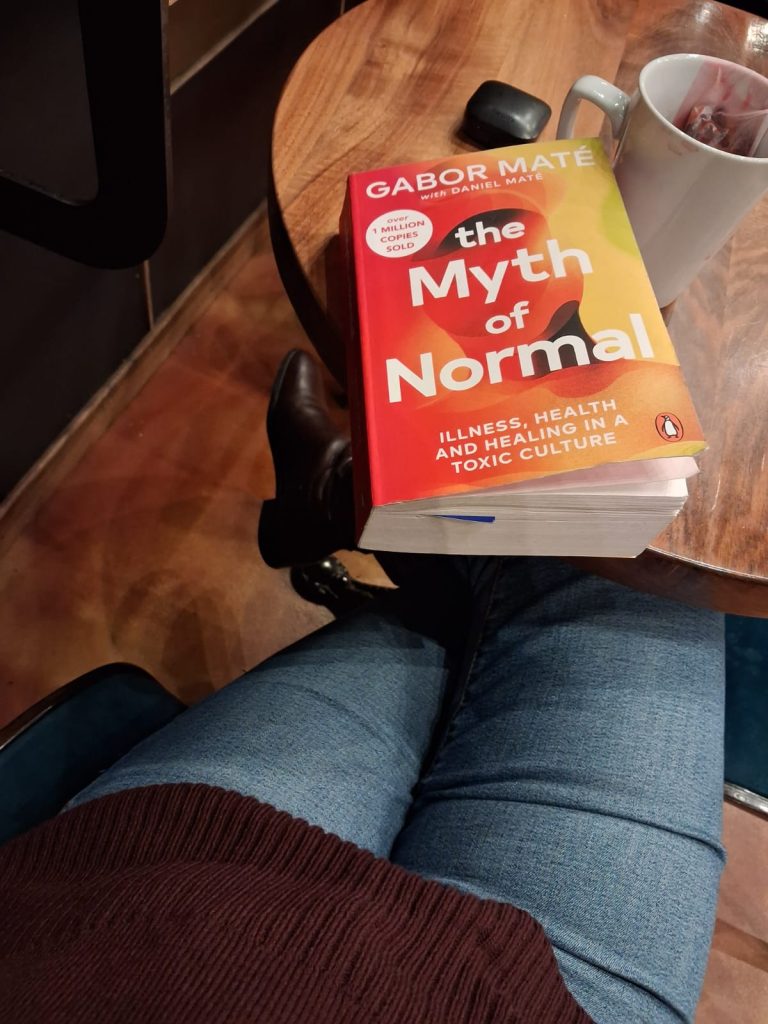
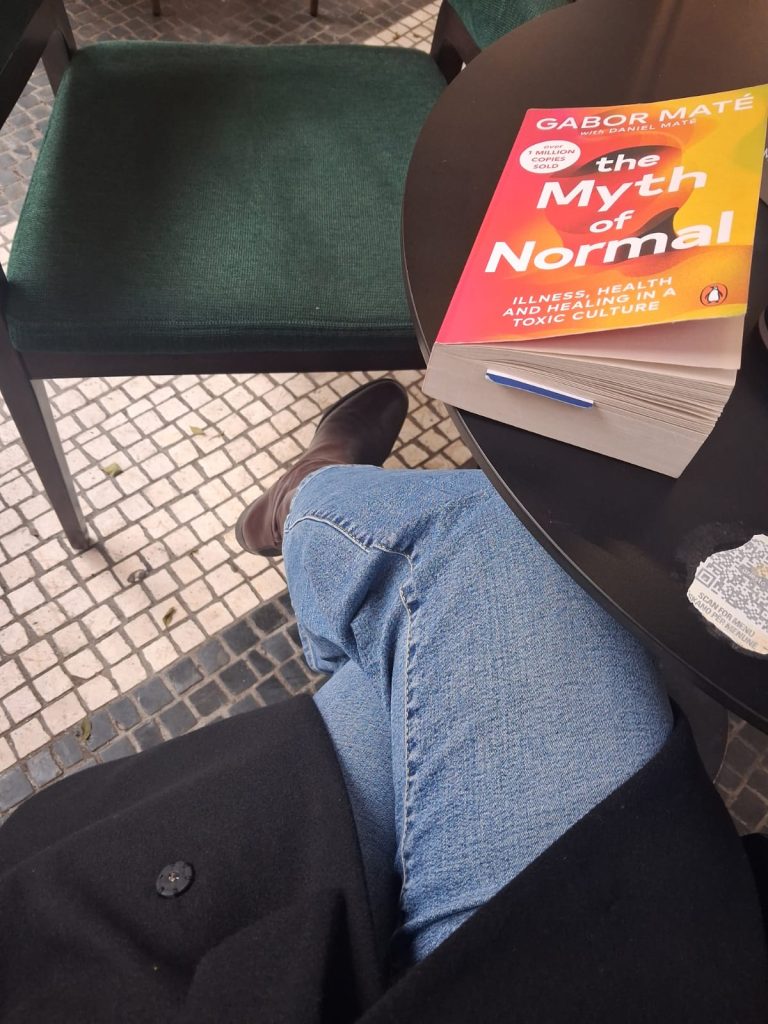
As I read The Myth of Normal by Gabor Mate, I begin to understand that many modern illnesses anxiety, chronic conditions, autoimmune diseases are not merely biological issues. They are often echoes of unhealed trauma, of suppressed emotions, of the constant “yes” we give to the world while telling ourselves to wait.
The body does not forget. Our immune system cries out in its own way when we ignore it. It tells us: stop. Care for your body and your mind. Before you are part of a system, you are a human being. Before you produce, you must live.
Perhaps the “normal” we have been sold is not healthy at all. Perhaps true courage is not about becoming harder, but about remaining authentic. Preserving sensitivity, setting boundaries, listening to your body—these may be the greatest acts of rebellion in a world that wants you to be a machine rather than a human being.